
Tune History

The Stories Behind Your Favorite Tunes

Seneca Square Dance
Waiting For The Federals, etc.

How many names can one G tune have? In Old Time music, that is usually a rhetorical question, but in this case, according to thesession.org, the answer is more than 30! Many titles are just slight variations, and most players are aware that “Seneca Square Dance" and “Waiting For The Federals" are the same tune. But are you familiar with “John Holban’s Polka,” “Shelby’s Mule,” “The Old Racoon,” “Shoot That Turkey Buzzard,” or “The Higher Up The Monkey Climbs?” These are just a few that all share the same melody.
The tune was first recorded as “Seneca Square Dance" in 1926 by Fiddlin' Sam Long of the Ozarks for Gennett Records. He won the recording session as first place in a fiddle contest in Joplin, MO. Long is noted as the first Ozark fiddler ever recorded, and his version remains the definitive historical source. The "Seneca" in the title is thought to refer to the town of Seneca, Missouri, or the Seneca-Cayuga Nation in northeast Oklahoma, near where Sam Long once lived and worked as a miner. Additionally, and similar to what we learned in the Tune History of Cherokee Shuffle, the melody of “Seneca Square Dance” also does not really incorporate any elements of traditional Native American music.
If you would like some more Ozark fiddle music, there is an excellent book on the subject with 308 tunes, authored by Drew Beisswenger & Gordon McCann. Slippery Hill also has a page dedicated to those recordings.
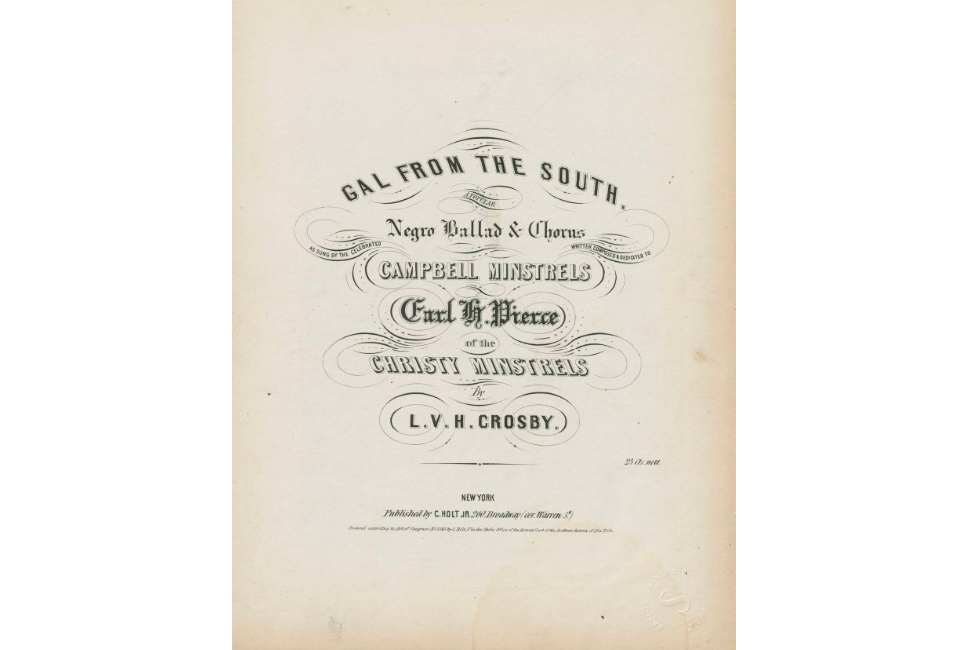
A possible precursor to "Seneca Square Dance" came from Joseph Leddy, a member of the Original Dixie Minstrels in St. Louis, who has been credited with the lyrics to "Shelby's Mule." This was a song about the flamboyant Missouri cavalry leader, Joseph Orville (“Fighting Jo”) Shelby and his year-long raids into Arkansas and Missouri, which began in 1863. Leddy reportedly borrowed the melody from a minstrel tune called "Gal From The South" by L.V.H. Crosby, published in 1848. The melody itself is often listed as "traditional," which, in this context, usually means a slave origin. It was very popular, and lyrics were quickly adapted and the tune renamed for either Union (Federal) or Confederate use.
“Waiting For The Federals” gained more popularity through two different paths in the modern era. Ry Cooder used it on the soundtrack for the 1980 film “The Long Riders", and Scottish fiddler Aly Bain introduced it to the British Isles and Celtic repertoire in the early 80’s after reportedly learning the melody from Jay Unger.
Now for some fun! When “Seneca Square Dance/Waiting For The Federals” gets played, casually toss out the lyrics to “The Higher Up The Monkey Climbs” from the 1928 novelty recording by Fiddlin' "Uncle" Bob Larkan and His Music Makers. (in the mp3 player below) Here are the lyrics in that recording:
The higher up the monkey climbs,
The higher up the monkey climbs;
The higher up the monkey climbs,
The greater he shows his…Yak yak yada daddy de da.
Probably to ensure radio airplay or some other marketing angle, either the artist or the record company chose to substitute nonsense lyrics for the monkey’s “behind” in this recording. On one hand, in the 1920s and 30s, nonsense lyrics and syllables in songs were very popular. On the other hand, this same time period is well known for many songs with ribald and explicit lyrics. So, entirely in the interest of historical accuracy, this is the original proverb:
The higher up the mountainside
The greener grows the grass.
The higher up the monkey climbs
The more he shows his a**.


Waiting For The Federals
Ally Bain & Phil Cunningham
Shelby's Mule
Seneca Square Dance
Fiddlin' Sam Long Of The Ozarks
1926
2/1/26